

An overview of the silent profit killers hiding in your inventory. How a POS system like 6Dx that offers smart inventory and real-time visibility can improve stock visibility and in turn, profits for a retail organization.
Today's retailers mostly do not have an inventory problem. They have a visibility problem. When inventory can't be seen clearly across stores, warehouses, and goods in transit decisions stop being data-driven and start being defensive. That's when profit leaks quietly, month after month. Those leaks show up in three predictable ways.
1. Stockouts: The Cost You Never Fully Measure
When a product isn't available at the moment a customer needs it, the loss goes far beyond one transaction. What actually breaks is trust. In both B2C and B2B environments, repeated stockouts signal unreliability. Customers don't always complain. They simply adjust their behavior by switching vendors, splitting orders, or reducing dependence on the retailer altogether.
The real cost of a stockout isn't the missed sale. It's the lifetime value of a customer who stops relying on the retailer. Most businesses never quantify this loss, which is why stockouts are tolerated far longer than they should be.
2. Overstocking: When Safety Stock Turns Into Trapped Capital
Overstocking is rarely the result of poor intent. It's usually a response to uncertainty. When teams don't trust inventory data, they compensate by ordering more than necessary. Safety stock grows. Buffers stack up. "Just in case" becomes the default strategy.
The consequences are expensive:
This isn't a people problem. It's a systems problem. Without shared, real-time visibility, overstocking becomes the rational but costly choice.
3. Ghost Inventory: Where Systems Say "Available" but Reality Says Otherwise
Few operational issues create more friction than ghost inventory. When systems report available stock that doesn't physically exist:
At this point, inventory stops being an operational issue and becomes a brand problem. And no marketing budget can repair trust lost at the point of fulfillment.
Why Most Inventory Systems Fall Short
Most traditional systems are built to record inventory events after they happen. They tell you what went wrong, but it's too late to prevent damage. This is where the approach behind 6Dx is fundamentally different.
Instead of reacting to inventory problems, the focus shifts to preventing them from surfacing.
How 6Dx Changes the Equation
The core shift is simple: move from fragmented visibility to a single, real-time source of truth. But visibility alone is not enough. What truly changes outcomes is what the system does with that visibility. This is where 6Dx goes beyond traditional inventory systems by embedding intelligence directly into day-to-day operations.
Demand Forecasting
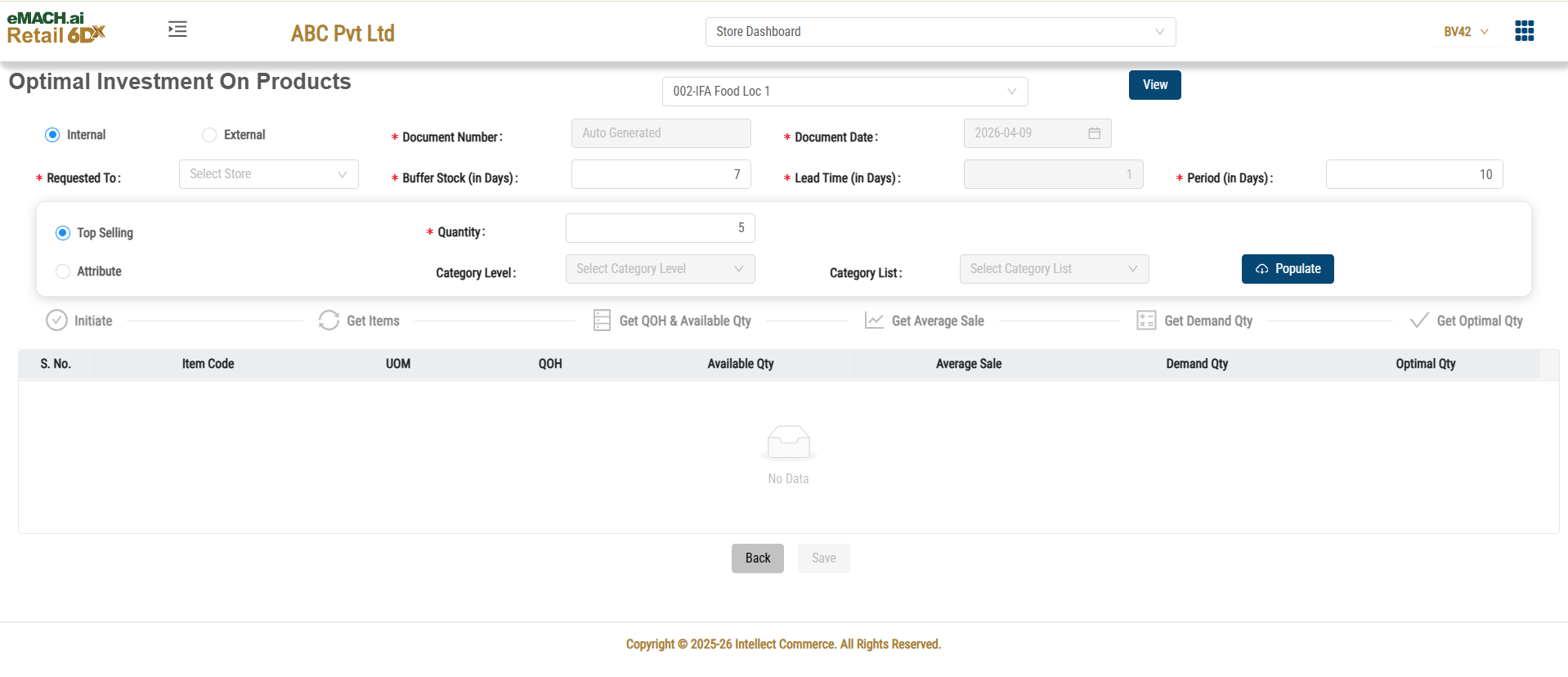
Instead of relying on historical averages or instinct-driven replenishment, 6Dx introduces demand forecasting that continuously learns from sales patterns, seasonality, and location-level behavior.
It doesn't just answer "what sold?" , it answers "what will sell next, where, and in what quantity?" This allows:
Replenishment stops being reactive. It becomes anticipatory ensuring the right products are available before demand peaks, not after it is missed.
Cycle Count
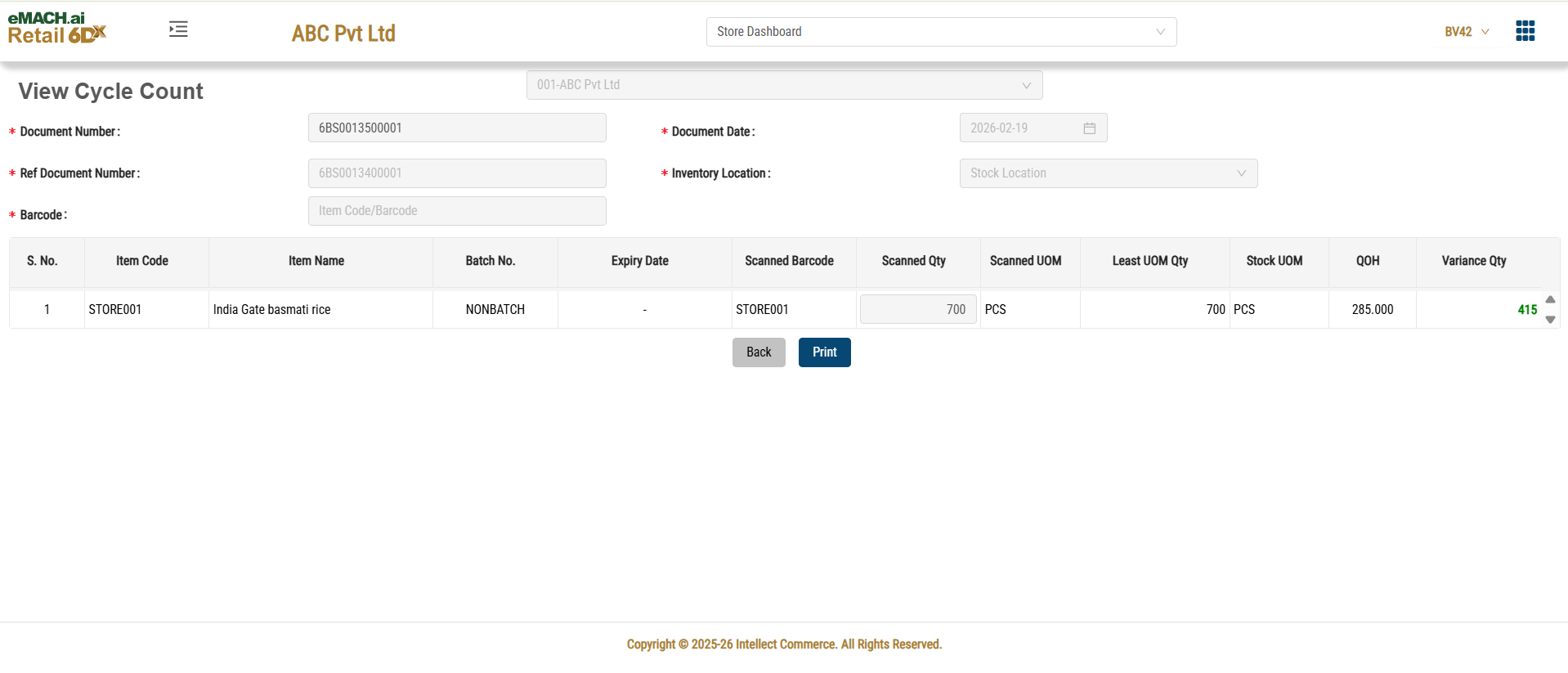
Traditional inventory audits are periodic, manual, and disruptive and yet still fail to eliminate discrepancies. 6Dx replaces this with intelligent cycle counting.
Instead of shutting down operations for full stock audits, the system:
This shift significantly reduces dependence on large-scale manual audits while improving stock accuracy to near real-time levels. As highlighted earlier, organizations using 6Dx have seen up to a 60% reduction in manual audits and over 99% stock accuracy . Inventory accuracy is no longer a periodic exercise it becomes a continuous state.
Store Profit Designer
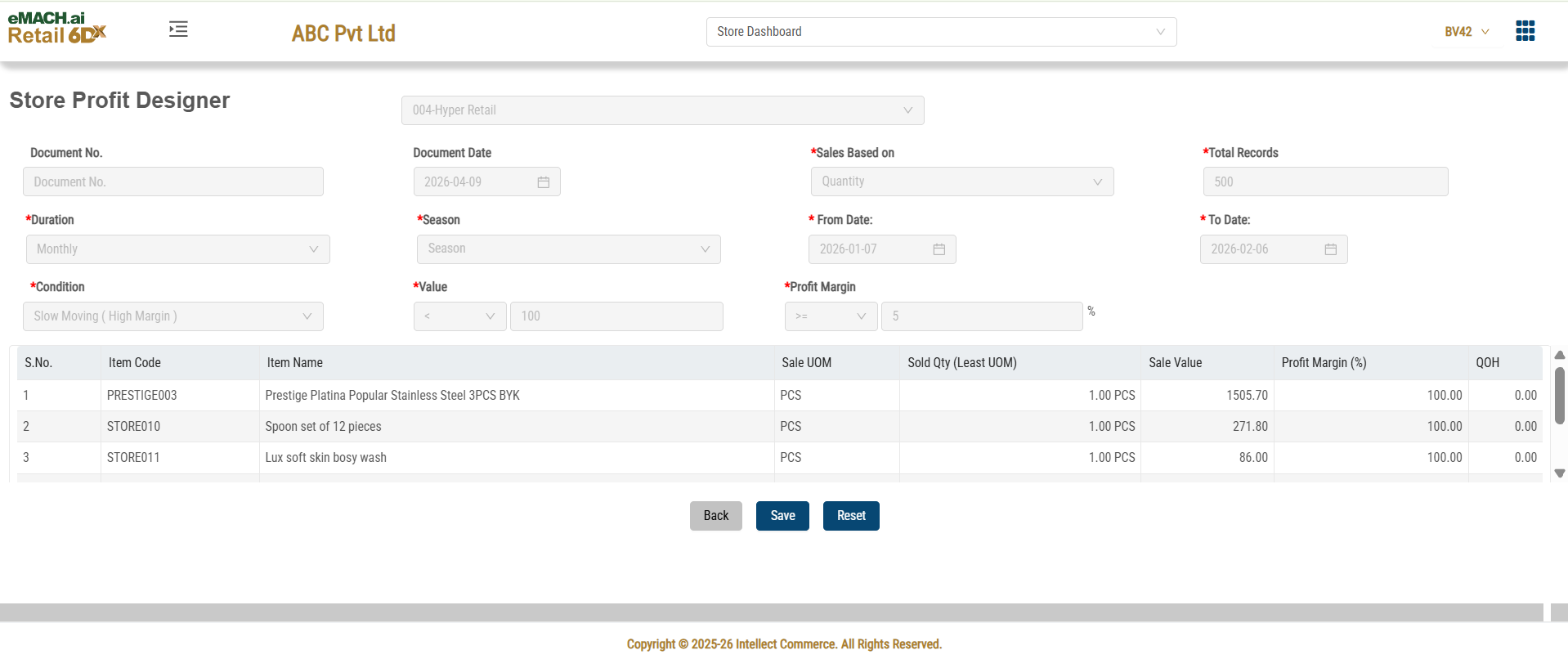
Most systems treat inventory as an operational function. 6Dx elevates it into a financial decision-making tool through the Store Profit Designer.
This module connects inventory decisions directly with profitability by enabling:
Instead of asking "How much stock do we have?", teams can now ask:
This transforms inventory from a passive asset into an actively managed profit driver.
The Financial Impact of Getting Visibility Right
Poor inventory visibility carries real, measurable costs:
Organizations using 6Dx typically see:
These are achieved not by pushing teams harder but by removing the uncertainty that forces bad decisions.
Final Thoughts
So in a nutshell, inventory isn't the problem. Blindness Is. Inventory only becomes expensive when businesses can't see it clearly. Once visibility is solved:
The real question every retailer and procurement leader should ask isn't whether inventory problems exist. It's this:
How much profit is your business quietly losing because you don't have a clear view of what you already own?
Until that question is answered, every other inventory initiative is just a workaround. And workarounds are always expensive.
Frequently Asked Questions
Q: How does 6Dx integrate with our existing ERP?
A: 6Dx is designed as a "Perfect Edge Layer." Using our eMACH.ai API-first architecture, it handles high-velocity store transactions in real-time while ensuring your central ERP (like SAP or Oracle) remains the system of record.
Q: Can 6Dx handle complex SKU attributes like size, color, and style?
A: Absolutely. 6Dx was built for the complexities of modern retail, including garment and electronics sectors where high-volume, multi-attribute tracking is non-negotiable.
Q: Does the system work if the store's internet goes down?
A: Yes. Our "Offline-First" capability allows your stores to continue processing sales locally. Once the connection is restored, the system automatically self-heals and syncs the data.


